

I. Degradable Polyester Porous Microspheres
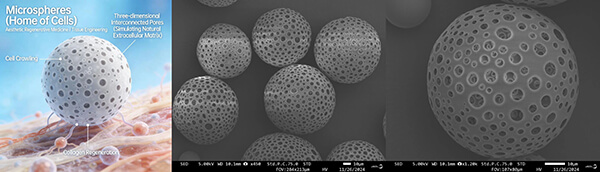
Degradable polyester porous microspheres are micron-sized particles prepared from biodegradable polyester materials. Their uniqueness lies in the three-dimensional network formed by a large number of interconnected open-pore structures distributed both inside and on the surface of the spheres, resulting in high porosity (typically 50%–85%), low density (0.3–0.6 g/cm³), and an ultra-high specific surface area (30–120 m²/g). Clinical studies show that porous microspheres can accelerate degradation (collagen deposition is visible within 2 weeks) and reduce the risk of nodule formation.
1. Biodegradability
Degradable polyester materials can be completely degraded, absorbed, and excreted by the human body without leaving any harmful residues. The degradation cycle of the material is tunable by design. The degradation products can stimulate the regeneration of human collagen, thereby achieving skin filling and tightening effects.
2. Biocompatibility
Degradable polyester materials possess excellent biocompatibility, low toxicity, low immunogenicity, and low inflammatory response. They do not cause inflammatory irritation or rejection after implantation. These materials have a history of clinical research and application spanning decades.
3. Porous Structure
Characterized by low density, high porosity, and a large specific surface area, the internal porous structure facilitates the adsorption and release of components such as drugs and growth factors for precise drug delivery and treatment.¹ Additionally, the porous structure is suitable for the ingrowth of tissue cells, enabling in situ repair and regeneration of tissues and organs.
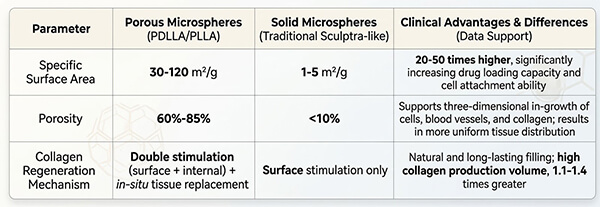
Conclusion: Porous microspheres have achieved a qualitative leap “from filling to regeneration to replacement,” and their clinical effects are significantly superior to traditional solid microspheres.
II. Applications of Degradable Polyester Porous Microspheres
1. Regenerative Aesthetic Medicine
Degradable polyester microspheres have been widely used in regenerative facial filler products, such as “Sculptra” (represented by PLLA microspheres) and “Ellansé” (represented by PCL microspheres). These primarily utilize the property of acidic degradation products of polyester materials to stimulate collagen production.² Currently, these filler microspheres are mainly solid. Recently, the application of porous microspheres in regenerative aesthetics has gained widespread attention, represented by the “AestheFill” facial filler containing PDLLA porous microspheres. It not only achieves the effect of stimulating collagen production through degradation but also facilitates the ingrowth of regenerated collagen into the porous structure to achieve in situ replacement, resulting in superior filling effects.
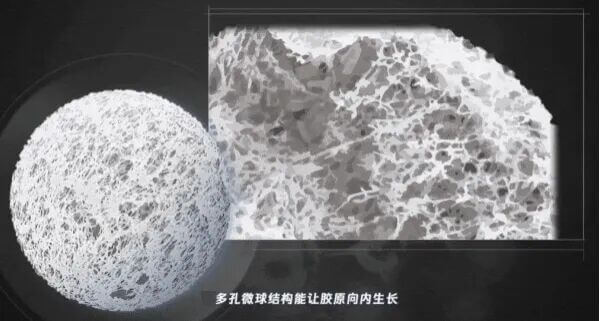
(Figure 1: Facial filler containing PDLLA porous microspheres)
2. Drug Carriers
The porous structure of degradable polyester porous microspheres can adsorb and release drugs, serving as drug delivery vehicles. They can be transported to specific sites via injection or other methods to achieve precise medical treatment.³
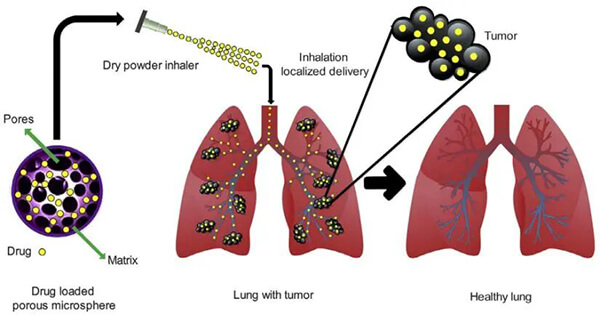
(Figure 2: Application of porous microspheres in drug loading³)
3. Tissue and Organ Repair
During the process of tissue regeneration, cell adhesion and proliferation usually require nutrients, cell growth factors, and other molecules for assistance. The vast specific surface area of porous microspheres provides support for cell adhesion, while the highly porous structure—with well-interconnected internal and external pores—acts like vasculature to facilitate the transport of nutrients, growth factors, and oxygen. Consequently, they are widely accepted as scaffolds for tissue regeneration.⁴
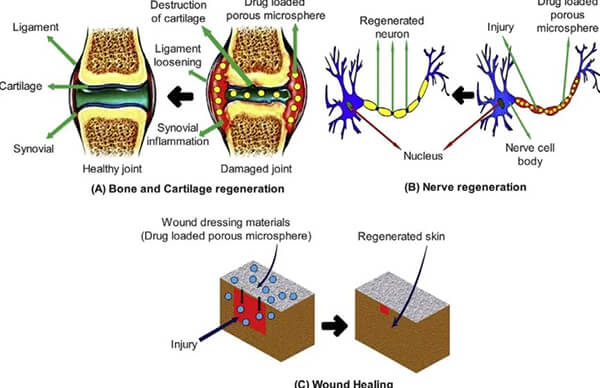
(Figure 3: Application of porous microspheres in tissue regeneration⁴)
4. Environmental Protection
Pollutant Adsorption: Due to their large specific surface area and abundant pore structures, degradable polyester porous microspheres can adsorb pollutants such as heavy metal ions and organic matter in water.⁵
III. eSUNMed Porous Microsphere Product Introduction
Product Highlights of eSUNMed Degradable Polyester Porous Microspheres:
Raw Materials: Medical-grade raw materials (Purity >99.5%)
Particle Size: 20–200 μm (Customizable)
Porosity: 20%–85% (Customizable, excellent interconnectivity)
Product Characteristics: Excellent dispersibility, long suspension time, stable performance after sterilization.
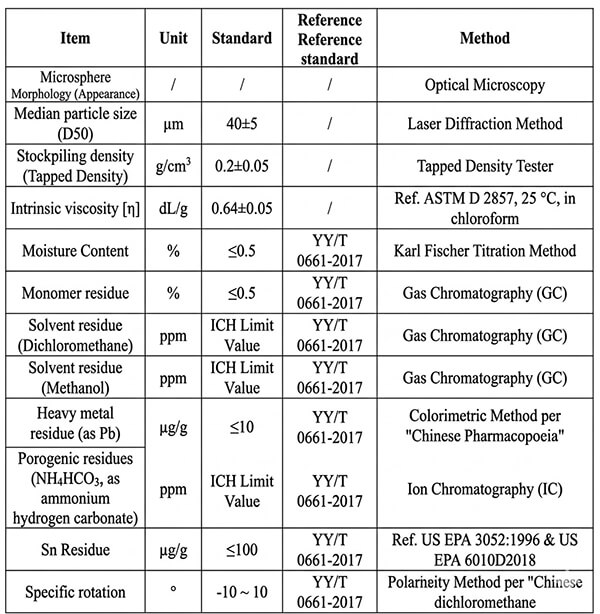
Scanning Electron Microscope (SEM) images of Polylactic Acid (PLA) porous microspheres are shown below:
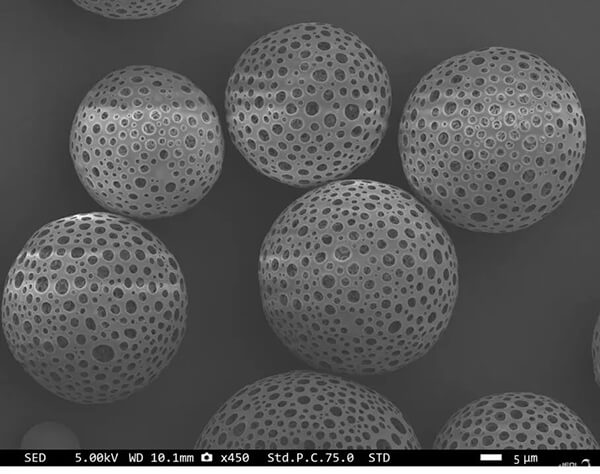
(Figure 4: SEM images of PLA porous microspheres)
References
[1] Superiority of poly(L-lactic acid) microspheres as dermal fillers.
[2] Takai, Chika et al. Key techniques to control porous microsphere morphology in S/O/W emulsion system. Colloids and Surfaces A: Physicochemical and Engineering Aspects 373 (2011): 152-157.
[3] He, Jie et al. Preparation and characterization of monodisperse porous silica microspheres with controllable morphology and structure. Journal of Polymer Science Part A 50 (2012): 2889-2897.
[4] Hou Dandan, Wang Yansen, Qi Liya, et al. Characterization and properties of polylactic acid porous microspheres [J]. Petrochemical Technology, 2024, 53(08): 1130-1136.
[5] Meenach, Samantha A. et al. Synthesis, optimization, and characterization of camptothecin-loaded acetalated dextran porous microparticles for pulmonary delivery. Molecular Pharmaceutics 9 2 (2012): 290-8.
[6] Straub, Julie Ann et al. Porous PLGA microparticles: AI-700, an intravenously administered ultrasound contrast agent for use in echocardiography. Journal of Controlled Release 108 1 (2005): 21-32.
[7] Niu Shoufei. Preparation and application of carrier materials for wastewater treatment [D]. Hebei Technology University, 2015.