

Degradable polyester materials (such as PLA, PCL, etc.) have become “star materials” in the field of implantable medical devices due to their excellent biocompatibility and degradation characteristics. However, their high molecular weight and strong hydrophobicity have created a very high technical threshold for bacterial endotoxin testing.
The traditional water extraction method carries the risk of not fully extracting internal endotoxins. How can we break through this testing dilemma? This article will take you through an in-depth analysis of the methodological evolution from the classic dissolution-extraction method to the dispersant-assisted method.
I. Background and Challenges: The Foundation of Implant Safety and the Dilemma of Endotoxin Testing
With the development of regenerative medicine and high-end medical devices, degradable polyester materials such as polylactic acid (PLA), polycaprolactone (PCL), and their copolymers have been widely applied in surgical sutures, skin regeneration and repair, medical aesthetic fillers (e.g., regenerative fillers), bone and soft tissue repair, and bioresorbable scaffolds.
As implantable medical devices, their safety is directly related to patients’ postoperative recovery. According to the requirements of the Good Manufacturing Practice for Medical Devices, strictly controlling Bacterial Endotoxin (BET) is a key source-control link to prevent implant-related pyrogenic reactions and ensure clinical safety.
Core Pain Points: Why do traditional testing methods “fail” with degradable polyesters?
- Hard for water molecules to penetrate: The traditional water extraction method (using BET water) recommended by the Chinese Pharmacopoeia relies on direct contact with the aqueous phase. However, the molecular structure of polyesters contains dense ester bonds and high crystallinity, making it extremely difficult for water molecules to penetrate into the interior of the material.
- Severe risk of missed detection: Endotoxins encapsulated inside the material or tightly bound by polyesters cannot be effectively released into the extraction liquid, resulting in “false negative” test results that fail to truly reflect the endotoxin contamination level of the material.
- Strong hydrophobic adsorption effect: High-molecular-weight polyesters are extremely hydrophobic. There is a strong affinity between their hydrophobic ester bonds and the hydrophobic end of the endotoxin (Lipid A structure), making it very easy for the released endotoxins to be “re-adsorbed”.
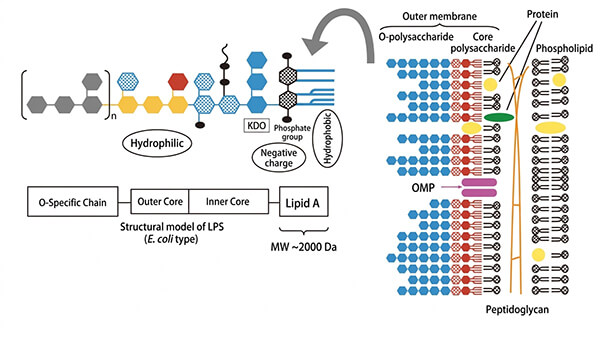 Figure 1: Endotoxin Structure
II. Methodological Breakthrough: An Upgraded Solution Covering All Molecular Weights of Materials
To solve the aforementioned “encapsulation” and “re-adsorption” challenges, testing technology has achieved a technical leap from traditional water extraction to organic solvent dissolution-liquid-liquid extraction and specific dispersant-assisted methods.
Scheme 1: Dissolution-Liquid-Liquid Extraction Method
[Applicable Objects] Degradable polyester materials with relatively low molecular weight, good organic solvent solubility, and low solution viscosity. [Principle and Mechanism]
1. Destroy the solid structure: Use specific organic solvents to completely dissolve the polyester material, thoroughly breaking up the polymer chains to fully release internally bound or encapsulated endotoxins.
2. Liquid-liquid extraction transfer: Add BET water (water for bacterial endotoxins test) and shake sufficiently for extraction, allowing the hydrophilic endotoxins to transfer to the aqueous phase.
3. Phase separation and detection: After standing for stratification, accurately aspirate the upper aqueous phase, and use the Chromogenic Method for quantitative detection.
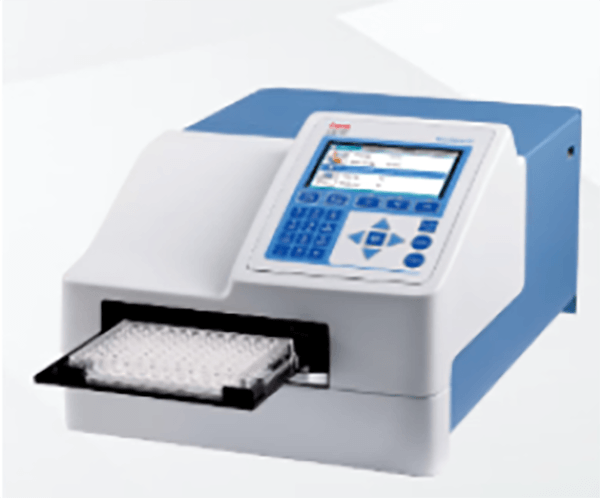
Figure 2: Microplate Reader
Scheme 2: Dissolution-Extraction-Endotoxin Dispersant Dilution Method
[Applicable Objects] Degradable polyester materials with high molecular weight, poor solubility, high viscosity, and strong hydrophobic adsorption effects. [Principle and Mechanism]
1. Complete dissolution and release: Utilize organic solvents to destroy the solid-state crystallization and polymer aggregation state of the material, releasing potentially adsorbed bacterial endotoxins.
2. Aqueous phase extraction: Add BET water for liquid-liquid extraction to enrich and transfer endotoxins to the aqueous phase.
3. Dispersant shielding: Use a specific endotoxin dispersant to dilute the aqueous extract. The dispersant molecules can effectively shield the interfacial interference from polyester hydrophobic groups and residual organic phases, block the re-adsorption of endotoxins by hydrophobic groups, and ensure that endotoxins are presented in a monomer/micelle dispersed state.
4. Detection and determination: Finally, use the Gel-Clot Assay, which complies with pharmacopoeia specifications, for quantitative/limit determination.
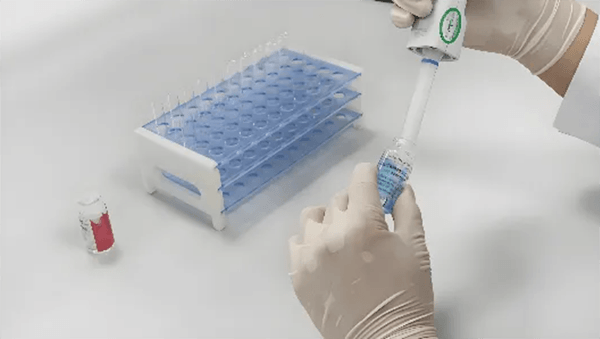
Figure 3: Gel-Clot Assay Image
Experimental Comparison: Water Extraction vs. Dissolution-Extraction Method
To verify the actual impact of different pretreatments on test results, the quality team conducted parallel tests on the same batch of degradable polyester samples using the traditional water extraction method and the dissolution-extraction method, respectively. The actual measurement comparison showed significant differences:
- Traditional water extraction method: The endotoxin test results were significantly lower.
- Dissolution-extraction method: Successfully released encapsulated endotoxins; test results were truly reflected and were higher than those of the water extraction method.
[Phenomenon Analysis] This actual measurement comparison directly reveals the risk of missed detection (false negative) in traditional methods. Because polyester materials have high crystallinity and strong hydrophobicity, water molecules can only contact the surface of the material, and endotoxins encapsulated inside the microscopic structure simply cannot be extracted. Only by completely dissolving the polyester with organic solvents can the endotoxins “sleeping” deep within the material be completely released, reflecting the material’s true endotoxin contamination level.
III. Technical Highlights of the Solution
- High sensitivity (0.005 EU/mg): Possesses an extremely high limit of detection, capable of accurately detecting trace amounts of endotoxins to meet the stringent quality indicators of implant-grade medical devices.
- Wide applicability (full molecular weight coverage): Corresponding pretreatment and detection pathways are available for everything from low-molecular-weight to high-molecular-weight implantable scaffold materials.
- Optimized pretreatment process (precise anti-interference): Through the combination of dissolution, extraction, and specific dispersion, it completely solves matrix interference and adsorption losses, improving data accuracy.
Conclusion and Outlook
From the “helplessness” of traditional water extraction to the initial breakthrough of “dissolution-extraction”, and then to the comprehensive methodological upgrade of “dispersant assistance”, the advancement of endotoxin testing technology for degradable polyesters has built a solid safety defense line for the quality control of biomedical polymer materials.
With medical device regulatory requirements becoming increasingly strict, establishing a scientific, rigorous, and highly sensitive quality control system will be a key support for promoting the safe launch of innovative medical devices!
eSUNMed Patent Information
- A detection method for bacterial endotoxins in degradable polyesters (Patent Status: Published)
- A gel detection method for bacterial endotoxins in high-molecular-weight degradable polyesters that eliminates adsorption interference (Published and under substantive examination)