

With the rapid development of high-end medical equipment and regenerative medicine, biomedical biodegradable polyester materials (such as PLLA, PCL, PLCL, etc.) have become key supports for device innovation in cardiovascular, orthopedics, medical aesthetics, and other fields.
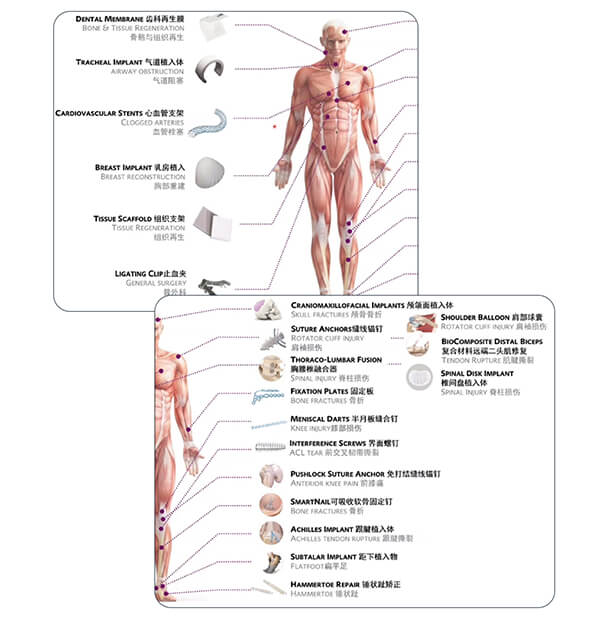
As a brand under eSUN dedicated to biomedical materials, eSUNMed has connected the full technological chain from monomer purification, polymer synthesis, and processing to analytical testing, providing the industry with high-quality medical-grade polyester materials and customized product services.
Breaking Through Underlying Synthesis Barriers
Achieving High Molecular Weight and High Uniformity
The final mechanical properties and degradation cycle of medical devices depend largely on the molecular structure design and synthesis process of the underlying materials. In the material polymerization stage, eSUNMed’s R&D team has solved two common industry challenges:
1. Synthesis of Ultra-High Molecular Weight PLLA
During the conventional polymerization process, as the molecular weight increases, the system’s viscosity rises sharply, which easily leads to uneven mass and heat transfer and difficulties in discharging.
By controlling the purity, moisture, and acid value of monomer raw materials, environmental humidity, as well as the reaction time and pressure to increase the designed molecular weight, eSUNMed successfully synthesized high molecular weight PLLA products with an intrinsic viscosity ≥4.0 dL/g and a weight-average molecular weight (Mw) of approximately 1.0 × 10⁶ g/mol. These high molecular weight materials can provide implantable medical devices with superior mechanical strength and longer-lasting degradation cycles.
2. Fine Regulation of Copolymers (such as PLCL)
In copolymerization reactions, there are significant differences in the reactivity ratios of different monomers (for example, the reactivity ratios of lactide and caprolactone are different), which easily leads to uneven copolymer composition.
Through in-depth research on reactivity ratios and dynamic process verification, the team achieved the precise synthesis of copolymers like PLCL, ensuring the uniformity of material viscosity and copolymer composition within batches, thus providing a stable raw material foundation for downstream processing.
Expanding the Boundaries of Material Processing
Porous Microspheres and Medical-Grade 3D Printing Filaments
To meet the needs of different clinical application scenarios, eSUNMed has deeply laid out its material processing and molding technologies, focusing on tackling microsphere preparation and medical-grade 3D printing filament extrusion technology.
1. Highly Controllable Microsphere Processing Technology
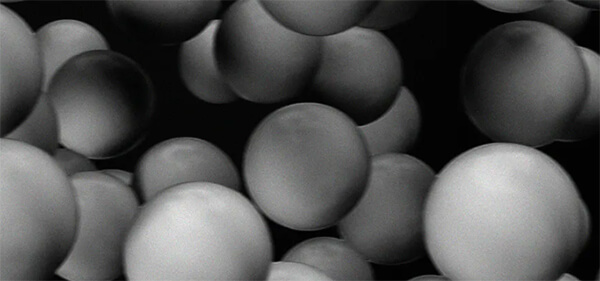
Microspheres are widely used in sustained and controlled drug release as well as regenerative medical aesthetic filling, such as anti-aging dermal fillers. eSUNMed systematically optimized the emulsion solvent evaporation process, finely adjusting parameters such as oil phase and water phase concentrations, emulsification speed, and temperature, achieving highly efficient preparation with a target particle size yield >80% and a narrow particle size distribution (span <0.7).
The double emulsion process is simple and easy to scale up for mass production. By precisely controlling the porosity and pore size, the prepared porous microspheres can provide a larger filling volume for tissues after implantation, yielding a better filling effect and being more conducive to the gradual ingrowth and in-situ replacement of collagen fibers.
2. Medical-Grade 3D Printing Filaments
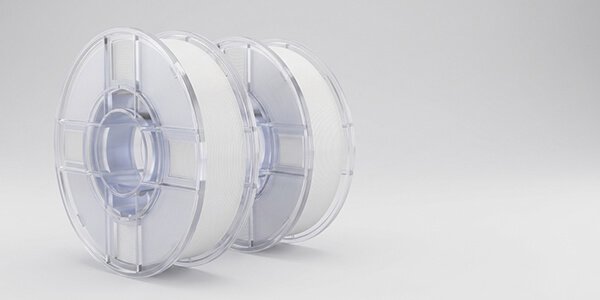
For tissue engineering applications such as bone repair and soft tissue scaffolds, 3D printing is an important processing method.
eSUNMed adopts a low-shear precision extrusion process to solve the pain points of polymer materials being prone to degradation and a broadened molecular weight distribution during thermal processing. The medical-grade PLLA filaments produced by eSUNMed have a stable filament diameter (1.75 ± 0.05 mm), maintain an intrinsic viscosity above 2.5 dL/g, and possess good tensile strength (60 MPa).
Currently, the related filaments have passed multiple biocompatibility tests, including cytotoxicity and intracutaneous reactivity. The PLLA filaments have completed the Medical Products Administration Master File registration.
Establishing an Independent Analytical Testing Platform
Fully Ensuring the Biosafety of Related Products
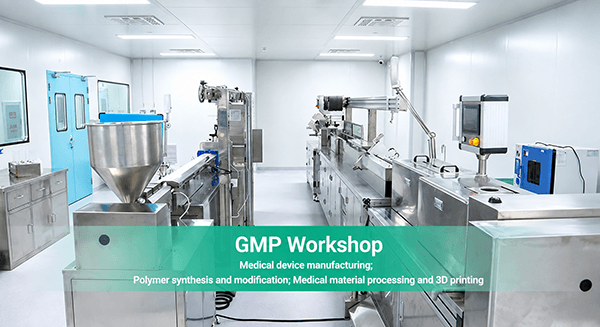
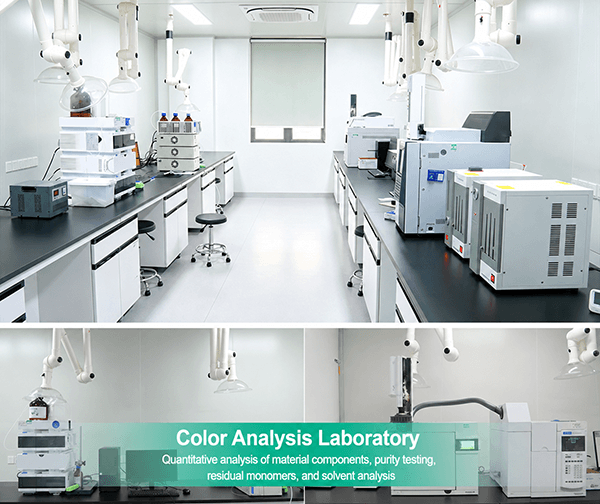
eSUNMed has now established a comprehensive independent analytical testing platform, covering advanced equipment such as FTIR, GPC, gas chromatography, laser particle size analyzers, and Ubbelohde viscometers.
In terms of crucial endotoxin testing, since trace amounts of endotoxins can trigger fever or macrophage inflammatory responses in the human body, leading to granulomas at the implantation site, the accuracy of its testing is of vital importance. When handling high molecular weight materials using traditional extraction methods, because the materials have a strong adsorption effect on bacterial endotoxins, it is prone to yielding “false negatives” caused by incomplete extraction.
Addressing this difficulty, eSUNMed adopts the “gel-clot method” combined with a dedicated bacterial endotoxin dispersant to fully dissolve and extract the samples, effectively ensuring the evaluation accuracy of biosafety for high molecular weight implant products.
Consolidating Technological R&D Strength
Serving the Biomedical Materials Market
Through continuous technological accumulation, eSUNMed has built a professional R&D team where master’s and doctoral degree holders account for over 60%. The company currently holds 10 authorized patents, and its technological layout comprehensively covers core fields such as the purification of medical-grade lactide, synthesis processes of biodegradable polymers, 3D printing resins, and microsphere preparation.
The company has passed the ISO 13485 medical device quality management system certification, and 10 of its core products have completed Master File registration, providing immense convenience for the registration and declaration of downstream medical device enterprises.
Facing the ever-growing biomedical materials market
eSUNMed will continue to adhere to the concepts of “customer demand-driven”
and “global vision layout”
tackling key bottlenecks in material synthesis and processing
In the future
eSUNMed will join hands with more domestic and foreign medical device and medical aesthetic innovative enterprises
to jointly promote the clinical application and industrial upgrading of biomedical biodegradable materials