

I. Medical PEG-Polyester Materials: Star Polymers in the Biomedical Field
In modern medicine, a class of polymer materials is quietly changing the way we approach medical treatments—PEG-polyester materials. Acting like an “invisible guardian” within the human body, they combine the hydrophilicity of polyethylene glycol (PEG) with the biodegradable properties of polyesters (such as PLA, PLGA, PCL), enabling functions to be “tailor-made” according to specific needs. PEG is a highly hydrophilic polymer that can make the material surface “invisible” (stealth), making it difficult for the human immune system to recognize and clear. Polyesters act as a controllably degradable “skeleton,” which, after completing its mission, can be gradually broken down by the body into harmless small molecules (such as water and carbon dioxide) and ultimately metabolized and excreted. The copolymer formed by combining the two features excellent biocompatibility, controllable degradability, good mechanical properties, and super hydrophilicity, making it a star material in fields such as drug delivery, tissue engineering, and implantable devices.
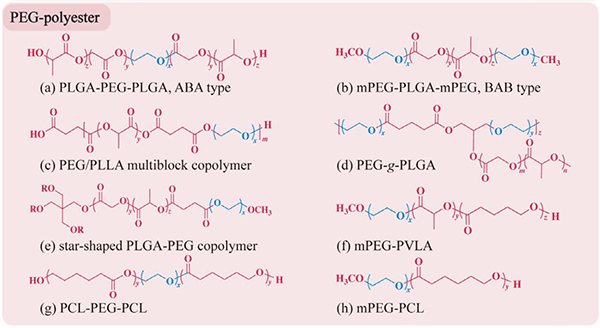
Figure 1: Chemical structures of several typical thermo-responsive polyethylene glycol-based polymers [1]
II. Molecular Design and Performance Advantages: A Precisely Regulated “Smart Material Engine”
2.1 The core objective of molecular design is to achieve precise regulation of the material’s assembly behavior, mechanical properties, degradation rate, biocompatibility, and functional responsiveness by modulating the chemical structure of the blocks, molecular weight, sequence distribution, and end-group functionalization properties, thereby meeting the requirements of different application scenarios.
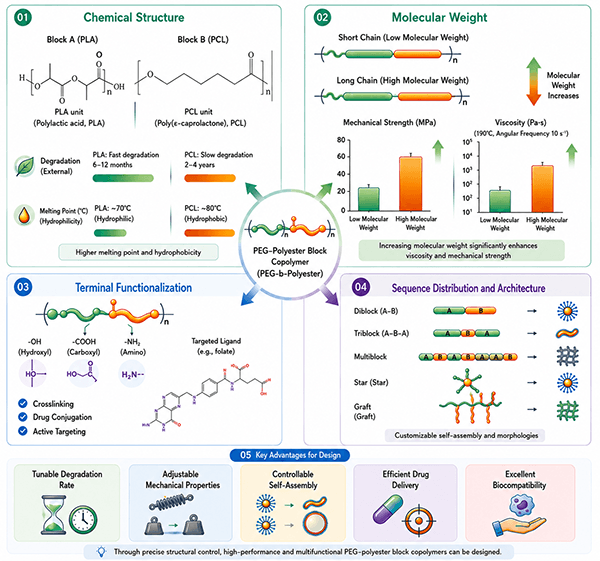
Figure 2: Schematic diagram of the molecular design of PEG-polyester block copolymers
(1) Block Structure and Molecular Weight Regulation
PEG-polyester copolymers commonly feature diblock and triblock (ABA/BAB type) structures. Molecular weight regulation can significantly tune the hydrophilic-hydrophobic balance and degradation behavior. As shown in the following schematic, by introducing a hydrophilic mPEG1000 block to construct an amphiphilic structure, the water contact angle of the material decreases significantly (from approximately 90° to 45°) as the mPEG content increases. This indicates that regulating the block ratio can effectively improve the hydrophobicity of pure PLLA, achieving precise control over surface hydrophilicity. Meanwhile, the weight loss of the mPEG-PLLA copolymer is significantly higher than that of pure PLLA. This demonstrates that the introduction of the mPEG block enhances the hydrophilicity of the material, promotes the penetration of water molecules and hydrolysis reactions, and thereby accelerates the macroscopic degradation (weight loss) of the material.
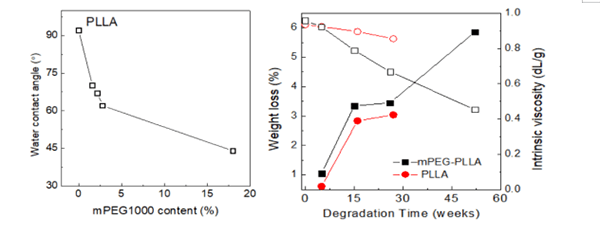
Figure 3: Schematic diagram of the effect of mPEG1000 content on the hydrophilicity of mPEG-PLLA copolymers (left); Schematic diagram comparing the degradation behaviors of mPEG-PLLA and PLLA (right)
(2) Topology Diversification
PEG-polyesters can be constructed into complex topological structures such as linear, star, comb, dendritic, and cyclic configurations. Relying on their multi-arm characteristics, star and hyperbranched structures significantly increase functional group density and drug loading space, enhancing self-assembly stability; comb and dendritic structures utilize large steric hindrance to tremendously enhance anti-protein adsorption and long-circulation capabilities; cyclic structures, possessing no end groups, offer more controllable degradation and longer in vivo retention. The diversification of topological structures provides a more precise and rational regulatory dimension for the materials, offering broad scope to meet complex targeted delivery and smart responsiveness demands.
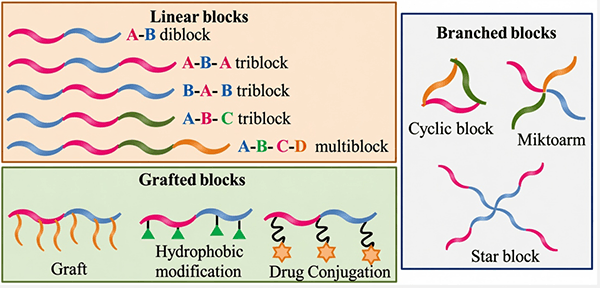
Figure 4: Design principles of the structure of PEG-polyester block copolymers [2]
(3) End-Group Functionalization
Introducing active groups (-NH₂, -COOH, -NHS, -MAL, etc.) at the ends of PEG or polyester chains enables covalent coupling with bioactive molecules such as antibodies, peptides, and nucleic acids, endowing the material with active targeting functions.
(4) Thermo-Responsive Design
By adjusting the block ratio, molecular weight, and concentration of the PEG-polyester, the material can possess a critical gelation temperature (critical gel concentration). When the copolymer concentration exceeds the critical gel concentration, its aqueous system exhibits three different physical states depending on temperature changes: sol state, gel state, and precipitate. Specifically, as the temperature rises, the system successively undergoes a sol-gel phase transition and a gel-precipitate phase transition, with corresponding critical temperatures being the sol-gel transition temperature (Tgel) and the gel-precipitate transition temperature (Tprecipitate). Meanwhile, Tgel decreases as the concentration increases, while Tprecipitate exhibits the opposite trend, meaning the gelation window of the system gradually widens as the polymer concentration increases.
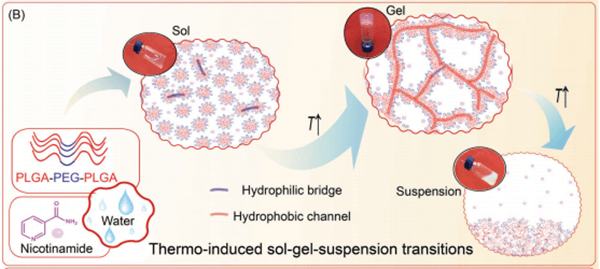
Figure 5: PLGA-PEG-PLGA thermoreversible hydrogel — physical gelation mechanism [3]
2.2 Relying on their outstanding amphiphilicity and structural designability, PEG-polyester block copolymers exhibit significant comprehensive advantages in performance. Through precise regulation at the molecular level, multidimensional optimization of biosecurity, functionality, and environmental responsiveness has been achieved, empowering innovative breakthroughs and leapfrog development for the next generation of smart biomedical materials.
(1) Excellent Biocompatibility and Safety PEG itself possesses extremely low immunogenicity and cytotoxicity and has been approved by the FDA for human injection. The degradation products of polyester segments (such as lactic acid) can participate in normal human metabolism, eventually generating CO₂ and H₂O to be excreted, posing no risk of long-term accumulation.
(2) Excellent Processing Performance The material has good melt fluidity, making it suitable for various molding processes such as injection molding, extrusion, electrospinning, and 3D printing. It can be processed into complex structures like microspheres, fibers, and porous scaffolds, achieving personalized precise manufacturing.
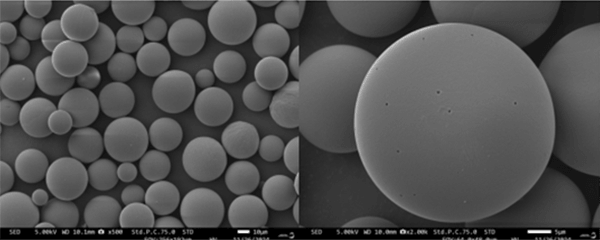
Figure 6: Schematic diagram of eSUNMed’s mPEG-PLLA copolymer microspheres
(3) Tunable Degradation and Release Behaviors
By altering the type of polyester (PLA, PCL, PLGA) and the block ratio, the degradation cycle can be precisely adjusted from a few weeks to several months. The figure below compares the drug release behaviors of different PEG-PLA block copolymer micelles. By regulating the stereochemical structure of the PLA block (PDLLA, PLLA, PLLA-b-PDLA), the crystallinity of the micelle core can be significantly altered, thereby enabling precise control over the drug release rate. Among them, stereocomplex micelles perform the best, featuring high drug loading and slow release. Such precise regulation of degradation rates and release profiles via molecular structural design makes PEG-polyester micelles ideal carriers for smart drug delivery.
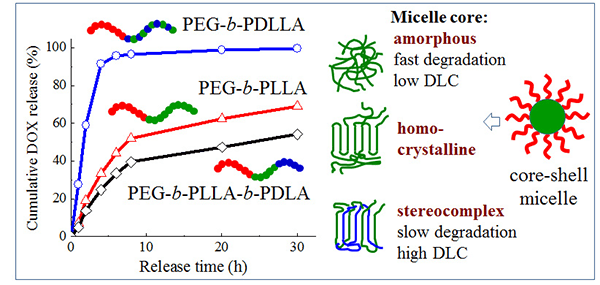
Figure 7: Schematic diagram comparing drug release behaviors of different PEG-PLA block copolymer micelles [4]
(4) Thermo-Responsive In Situ Gelation Capability
PEG-polyester materials (such as PLGA-PEG-PLGA, PCL-PEG-PCL, or PEG-PCL-PEG triblock copolymers) exist as low-viscosity solutions (sols) at room or low temperatures, facilitating injection administration; when the temperature rises to physiological temperature (approx. 37°C), enhanced hydrophobic interactions between hydrophobic polyester segments (such as PLA, PCL, or PLGA), micelle aggregation, and the dehydration of hydrophilic PEG segments cause a rapid sol-gel transition in the solution, forming a stable three-dimensional network gel and achieving in situ gelation.
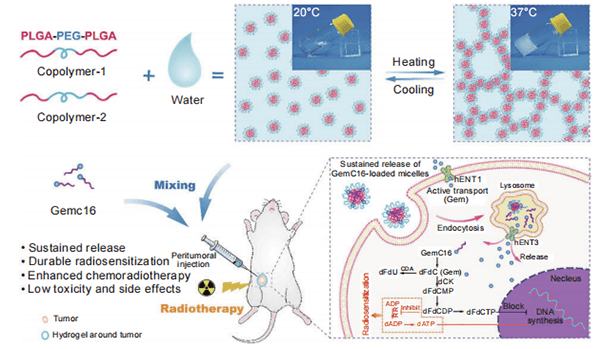
Figure 8: Schematic diagram of the mechanism of GemC16-loaded hydrogels and radiotherapy for synergistic anti-tumor effects [5]
(5) Good Mechanical Properties
Through the synergistic effects of hydrophilic flexible PEG segments and hydrophobic crystalline polyester segments, precise regulation of mechanical properties can be achieved: PCL or PLGA segments provide sufficient strength and rigidity, while PEG segments introduce toughness and flexibility. The elastic modulus of the resulting copolymers can typically be adjusted within the range of tens to hundreds of MPa (for example, the elastic modulus of PCL-PEG-PCL can be regulated between 338–705 MPa). Concurrently, they possess suitable elongation at break and compressive strength, capable of matching the mechanical requirements of various hard and soft tissues (such as cancellous bone, ligaments, or soft tissues).
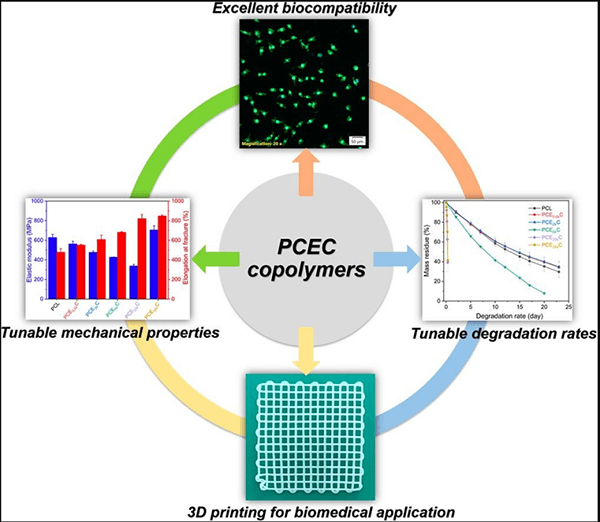
Figure 9: Schematic diagram of the mechanical and degradation properties of PCL-PEG-PCL copolymer 3D printed scaffolds [6]
III. Clinical Translation and Application Frontiers: Reshaping the “Multifunctional Platform” of Modern Medicine 3.1 Smart Drug Delivery Systems: From “Precise Delivery” to “Programmed Release”
PEG-PLLA can serve as a drug carrier, utilizing the water solubility of PEG and the biocompatibility of PLLA to encapsulate drugs, achieving sustained release and targeted delivery. By adjusting the ratio and molecular weight of PEG and PLA, drug release profiles can be precisely controlled to meet different therapeutic needs.
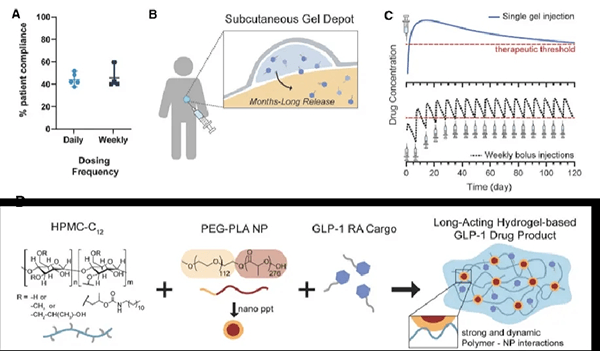
Figure 10: Preparation of PNP injectable hydrogels loaded with GLP-1 RA [7]
3.2 Tissue Engineering and Regenerative Medicine: Building “Living Scaffolds”
Due to core advantages such as controllable degradation rates, excellent biocompatibility, and potential for functional modifications, amphiphilic PEG-polyester block copolymers have become ideal scaffold materials in the field of tissue engineering. By simulating the natural extracellular matrix (ECM) microenvironment, they can be loaded with RGD peptides to promote cell adhesion, or carrying growth factors like BMP-2 and NGF to induce tissue differentiation. Combined with advanced manufacturing technologies like 3D printing and electrospinning, they can precisely construct scaffolds for bone, cartilage, nerve, and soft tissue repair. Thermo-responsive hydrogels can even be injected minimally invasively to gel in situ. Ultimately, this achieves the dynamic synchronization of scaffold degradation and tissue regeneration, completing a perfect transition of “temporary support → functional guidance → complete replacement,” providing revolutionary solutions for regenerative medicine.
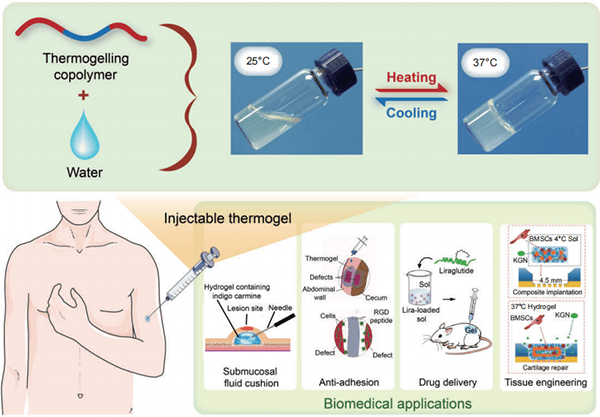
Figure 11: Schematic diagram of sol-gel transition and biomedical applications of PEG-PLGA hydrogels [8]
3.3 Medical Aesthetics Filling and Implantable Devices: Reshaping the “Smart Filling Matrix”
PEG-polyester materials are reshaping the fields of medical aesthetics and implantable devices by virtue of their controllable degradation cycles and excellent biocompatibility. Degradable polymer dermal fillers are highly favored for their biocompatibility, degradability, and capability as collagen stimulators. PEG-modified polymers not only retain their ability to promote collagen regeneration but also improve their overall performance, exhibiting stronger tissue compatibility. “Rubai Angel (NMPA Registration No. 20213130460)” is a cross-linked sodium hyaluronate gel containing poly(L-lactic acid)-poly(ethylene glycol) copolymer microspheres. The introduction of the PEG segments in the mPEG-PLLA microspheres enhances the interfacial compatibility between the microspheres and the aqueous gel matrix. This ensures that the microspheres can be stably dispersed within the gel system as single particles, effectively avoiding aggregation, agglomeration, or sedimentation caused by the hydrophobicity of the microspheres, and significantly improving the overall performance.
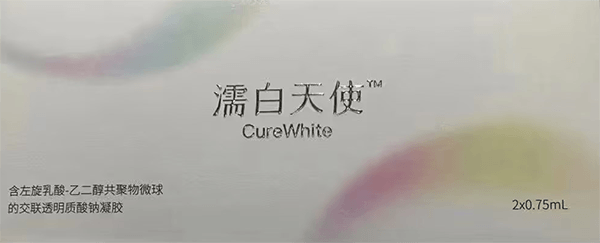
Figure 12: Cross-linked sodium hyaluronate gel containing poly(L-lactic acid)-poly(ethylene glycol) copolymer microspheres (Image from Imeik Technology Development Co., Ltd.)
In the field of implantable devices, PEGylation modification on material surfaces significantly reduces protein adsorption and fibrous capsule formation, enhancing the biocompatibility of devices such as breast implants and soft tissue expanders. Their controllable degradation properties further support sustained drug release functions, achieving the dual efficacy of “filling + therapy” and providing a safe, smart, and long-lasting solution for regenerative medical aesthetics.
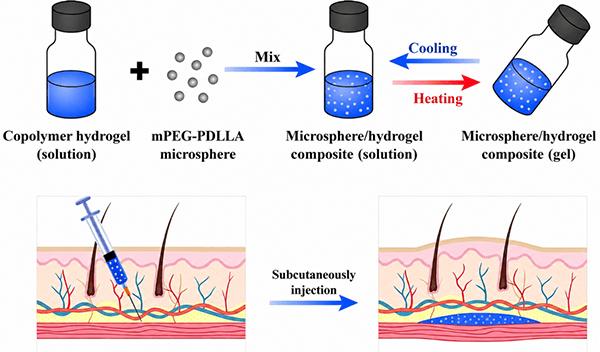
Figure 13: Thermosensitive composite materials via subcutaneous injection for skin enhancement [9]
IV. eSUNMed Amphiphilic Copolymer Products
eSUNMed (brand “eSUNMED”) is primarily dedicated to the development and application of biomedical polymer materials. eSUNMed can provide customized processing and synthesis services for amphiphilic copolymers with different molecular weights and segment compositions according to user requirements, including PEG-PLLA, PEG-PCL, PEG-PLGA, etc.
Below is a partial materials product table from eSUNMed:
| Product Name | PEG Molecular Weight | Copolymer Molecular Weight |
|---|---|---|
| mPEG-PLLA | ~1000 | 100000 ± 20% |
| mPEG-PLLA | ~1000 | 10000 ± 20% |
| mPEG-PCL | ~1000 | 30000 ± 20% |
| mPEG-PCL | ~5000 | 20000 ± 20% |
| PEG-PLGA7525-PEG | ~1000 | 4000 ± 20% |
| mPEG-PLGA7525 | ~1000 | 80000 ± 20% |
References:
[1] Jiayue Shi, Lin Yu, Jiandong Ding. PEG-based thermosensitive and biodegradable hydrogels. Acta Biomaterialia. 2021 July 128:42-59.
[2] Kuperkar, K.; Patel, D.; Atanase, L.I.; Bahadur, P. Amphiphilic Block Copolymers: Their Structures, and Self-Assembly to Polymeric Micelles and Polymersomes as Drug Delivery Vehicles. Polymers 2022, 14, 4702.
[3] C. Cai, J. Tang, Y. Zhang, W. Rao, D. Cao, W. Guo, L. Yu, J. Ding, Intelligent Paper-Free Sprayable Skin Mask Based on an In Situ Formed Janus Hydrogel of an Environmentally Friendly Polymer. Adv. Healthcare Mater. 2022, 11, 2102654.
[4] Ma, C. L.; Pan, P. J.; Shan, G. R.; Bao, Y. Z.; Fujita, M.; Maeda, M. Core-Shell Structure, Biodegradation, and Drug Release Behavior of Poly(lactic acid)/Poly(ethylene glycol) Block Copolymer Micelles Tuned by Macromolecular Stereostructure. Langmuir 2015, 31(4), 1527-1536.
[5] Ma, C. L.; Pan, P. J.; Shan, G. R.; Bao, Y. Z.; Fujita, M.; Maeda, M. Core-Shell Structure, Biodegradation, and Drug Release Behavior of Poly(lactic acid)/Poly(ethylene glycol) Block Copolymer Micelles Tuned by Macromolecular Stereostructure. Langmuir 2015, 31(4), 1527-1536.
[6] Yu-Yao Liu, Juan Pedro Fernandez Blazquez, Guang-Zhong Yin, De-Yi Wang, Javier Llorca, Mónica Echeverry-Rendón. A strategy to tailor the mechanical and degradation properties of PCL-PEG-PCL based copolymers for biomedical application. European Polymer Journal, Volume 198, 2023, 112388. [7] d’Aquino AI, Maikawa CL, Nguyen LT, Lu K, Hall IA, Jons CK, Kasse CM, Yan J, Prossnitz AN, Chang E, Baker SW. Use of a biomimetic hydrogel depot technology for sustained delivery of GLP-1 receptor agonists reduces burden of diabetes management. Cell Reports Medicine. 2023 Nov 21;4(11).
[8] Yaoben Wang, Lin Yu, Jiandong Ding. Thermogelation of amphiphilic copolymers in water. Chinese Science Bulletin. 2021.
[9] Yue Pan, Yao Xiao, Ying Hao, Kun Shi, Meng Pan, Zhiyong Qian. An injectable mPEG-PDLLA microsphere/PDLLA-PEG-PDLLA hydrogel composite for soft tissue augmentation, Chinese Chemical Letters. 33 (2022) 24 86–24 90.